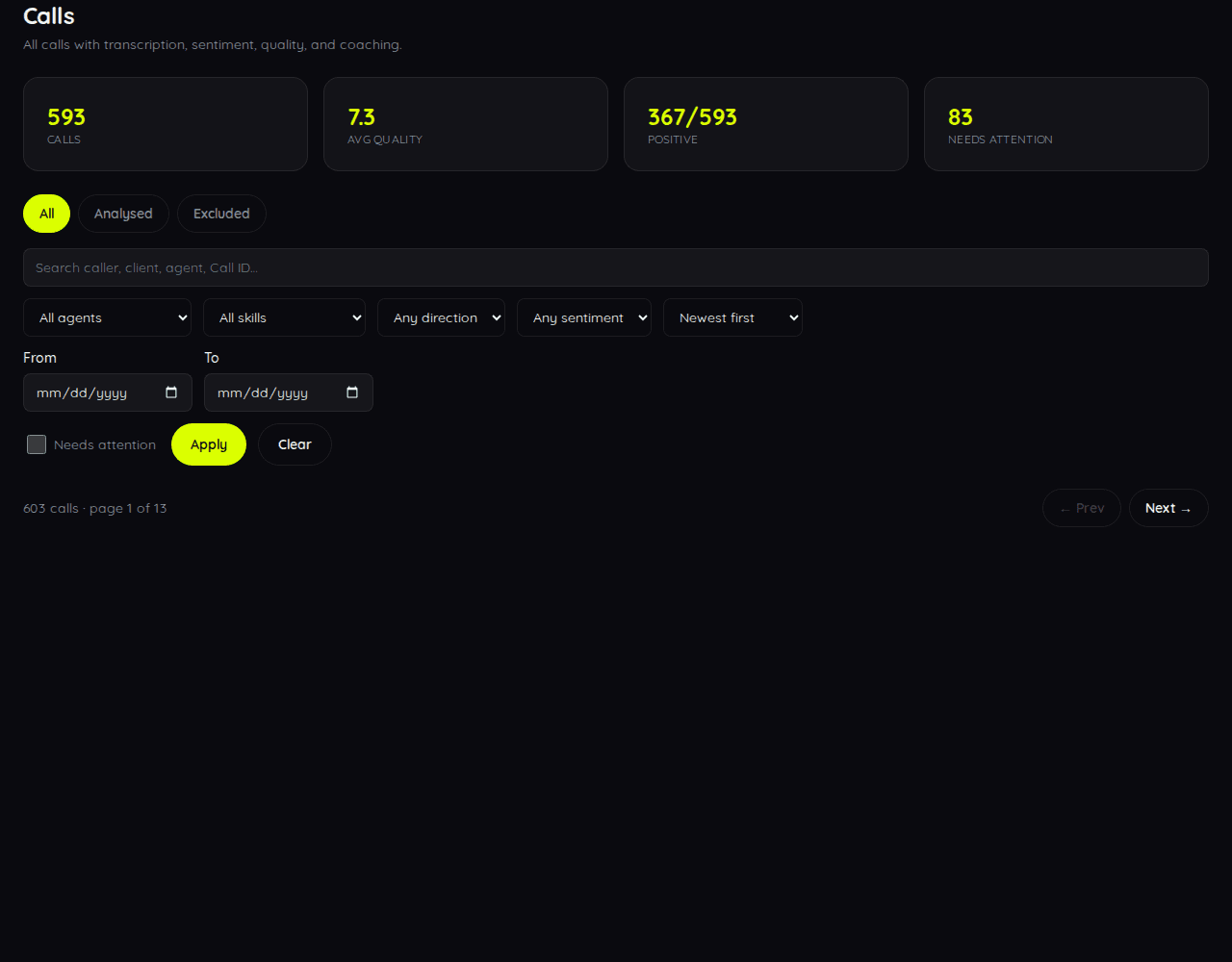
Calls and filters
Find every conversation by date, agent, skill, sentiment, score, and needs-attention status.
Call intelligence that turns recorded conversations into searchable transcripts, quality scores, coaching actions, detector alerts, and voice analytics for your team.
Standard call analytics can show volume and queue performance. Echo goes deeper: what was said, whether the customer left satisfied, which behaviours need review, and where managers should coach next.
It is built for managers who need practical review queues, agent comparisons, scheduled reports, and evidence they can drill into without listening to every recording manually.
These screens are captured from the live Echo demo tenant with synthetic data, showing how managers move from a top-level health view into calls, detector rules, coaching reports, and agent performance.
Find every conversation by date, agent, skill, sentiment, score, and needs-attention status.
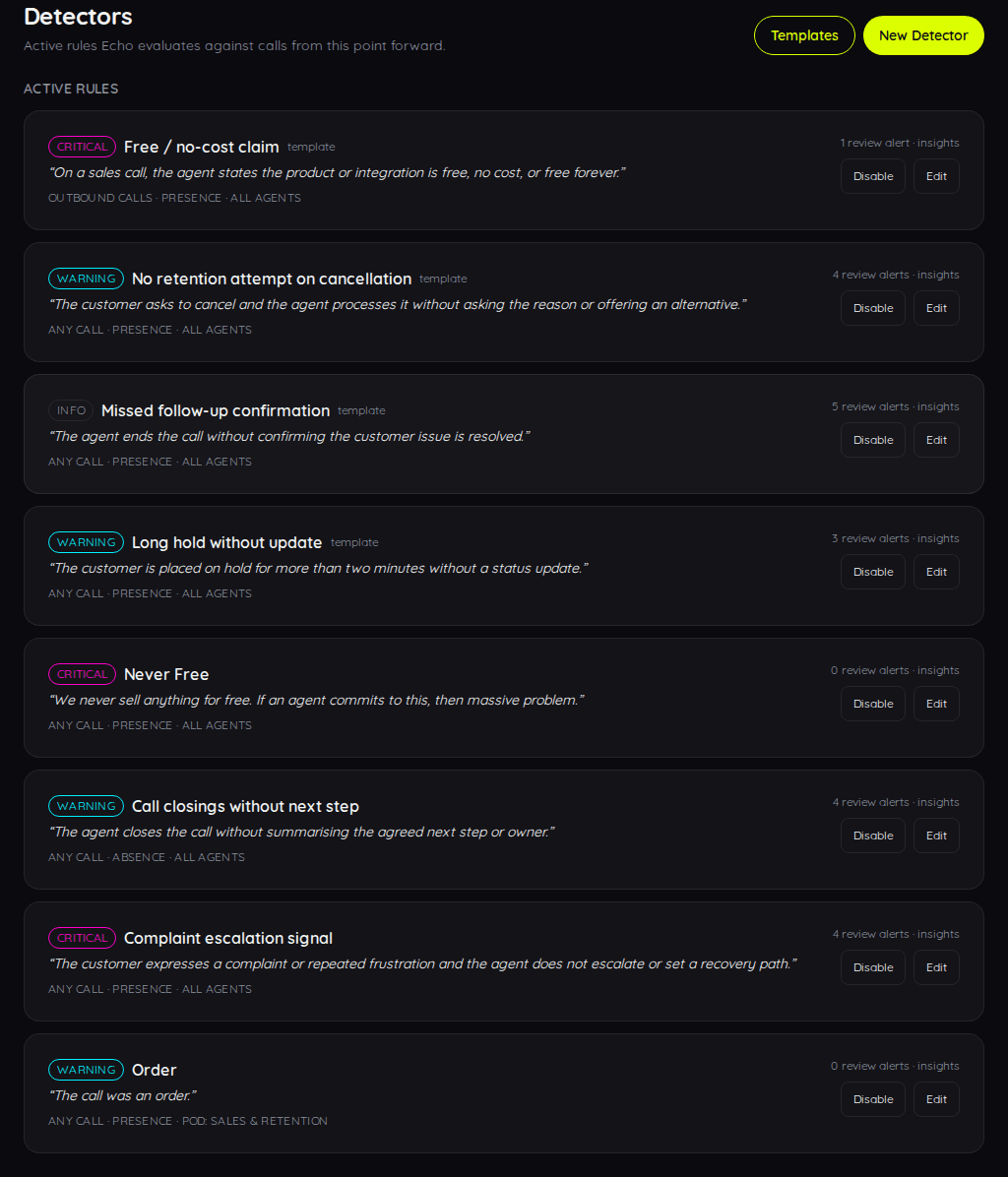
Turn compliance risks and coaching signals into clear rules that Echo checks against future calls.
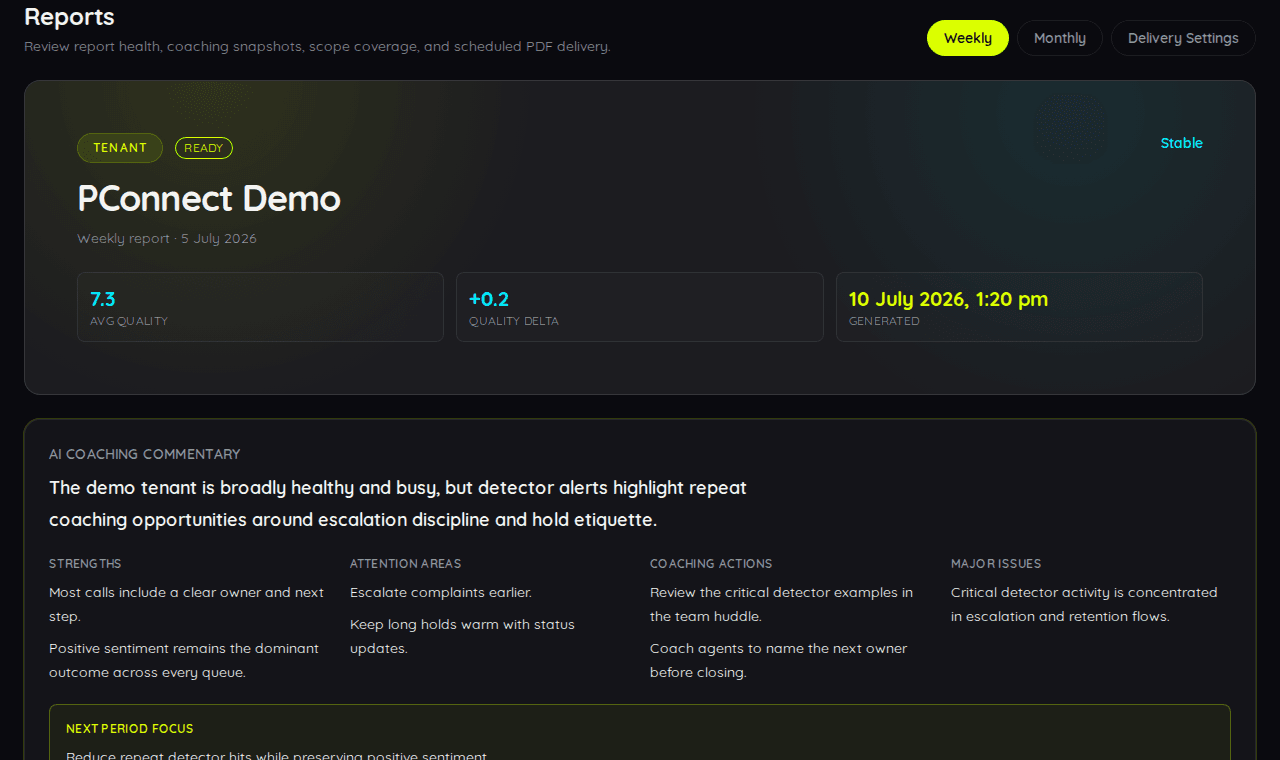
Review AI-generated weekly and monthly commentary, quality movement, and next-period focus.
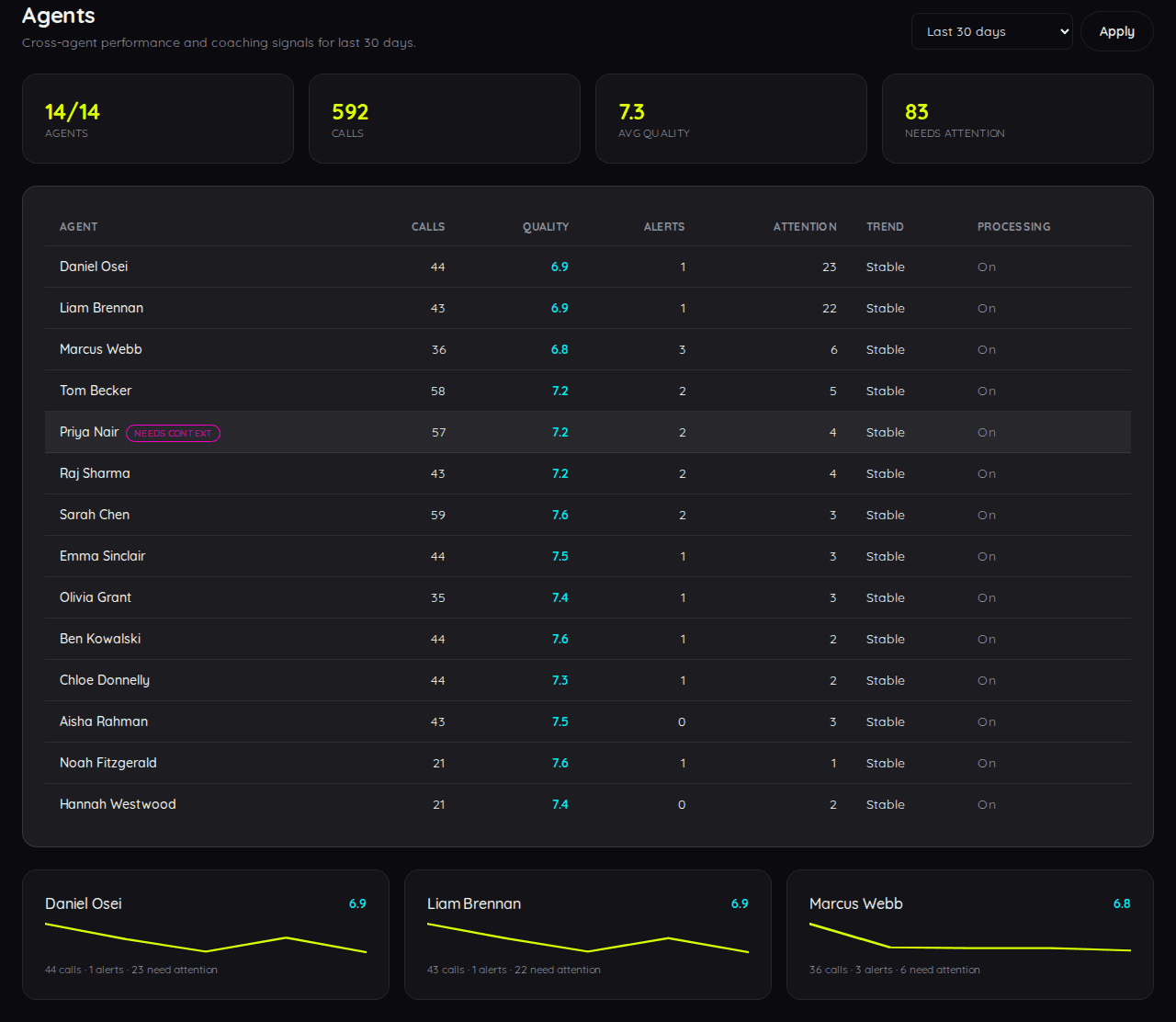
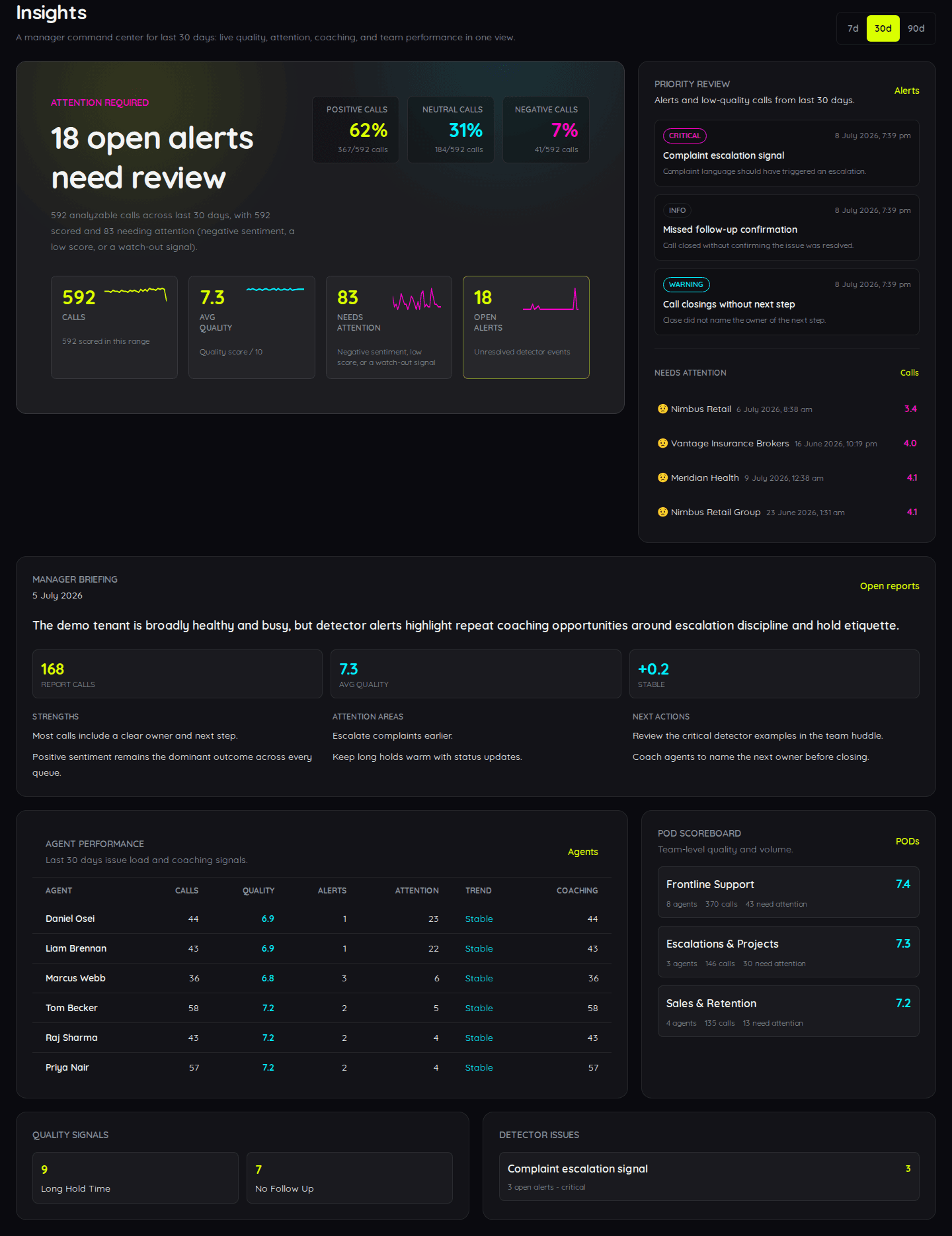
Compare call volume, average quality, alerts, attention signals, trend, and processing status.
Echo combines call review, AI analysis, coaching, reporting, and secure access into one operating surface.
Open every processed call with transcript, sentiment, quality score, topics, tone, coaching notes, detector matches, and caller context.
Track volume, quality, sentiment, open alerts, needs-attention calls, agent trends, POD performance, and coaching signals in one place.
Describe the behaviour, phrase, missing action, or compliance step Echo should look for, then route Warning and Critical matches into review.
Compare performance across agents and teams, then use role and KPI context so coaching reflects what each role is meant to achieve.
Generate stored coaching snapshots for the tenant, each POD, and each agent, with AI commentary, strengths, attention areas, and next actions.
Use Microsoft sign-in or MFA-protected password accounts, plus scoped REST API access for directory syncs and recording ingest.
Echo keeps the pipeline practical: ingest the recording, classify the call, enrich it with AI, then route the signals managers can actually act on.
Start with a supported call source such as Xima, or push recordings through the API when the platform cannot be connected directly.
Echo turns audio into transcripts and excludes low-value calls such as short, internal, unanswered, voicemail, IVR, or no-conversation calls from analytics.
Each analyzable call receives sentiment, quality, topics, coaching notes, detector checks, and trends that roll up to agents and PODs.
Managers work detector alerts to closure, inspect the calls behind issues, and send weekly or monthly PDF reports when snapshots are ready.
Echo can connect directly to supported platforms such as Xima, or accept call metadata and recordings through API workflows when the source needs to push data in.
Microsoft sign-in, MFA-protected password accounts, tenant roles, and scoped API keys keep call data available to the right people and integrations.
Sentiment, tone, quality flags, role-aware coaching, detector evidence, and report commentary turn recordings into specific management actions.
Echo is call intelligence for recorded conversations. It complements your call source by processing recordings into transcripts, scoring, coaching, alerts, and reports.
Yes. The public Echo login includes an Explore the demo option with synthetic PConnect demo data, so you can inspect the product without using real customer calls.
Detectors can look for phrases, behaviours, missing actions, escalation risks, compliance steps, and coaching patterns. Warning and Critical matches create review alerts; Info matches stay as reporting and coaching signals.
Yes. Echo stores weekly and monthly report snapshots for the tenant, PODs, and agents, including quality movement, strengths, attention areas, coaching actions, and scheduled PDF delivery options.
Echo supports Microsoft sign-in and MFA-protected password accounts, role-based tenant access, and scoped API keys for programmatic access.
Talk to PCONNECT about Echo for your team, or open the live demo to explore the product with synthetic data.